


How Important is Data Analysis to Business?
In today’s digital era, where data is a valuable asset, effective data analysis is essential for organizations to identify trends and swiftly adapt business strategies. This enables them to gain a competitive advantage in an ever-changing market.

What is Data Analysis?
Data analysis is a critical process that businesses should not overlook. It involves inspecting, filtering, and presenting raw data in a way that is easy to understand. The process employs statistical methods, data analytics tools, and artificial intelligence (AI) to support decision-making in both administrative and high-precision industrial operations.
The Importance of Data Analysis in Business
Data analysis plays a vital role in fostering sustainable organizational growth and enhancing competitive advantage in five key ways:
-
Supports Business Decision-Making
Enables executives to clearly see trends, risks, and opportunities, and to formulate precise strategies. -
Enhances Customer Understanding
By gathering data from various channels, businesses gain insights into customer behavior, needs, and satisfaction—improving product and service development. -
Optimizes Operational Processes
Enhances production control, work planning, and resource allocation for greater efficiency. -
Provides Competitive Advantage
Data analysis enables businesses to develop technologies and products that better meet market demands, leading to sustainable growth in sales. -
Reduces Fraud Risk
A robust data analysis system helps organizations assess and manage risks while maintaining product quality—crucial for corporate credibility.
Interested in improving your production processes with our software? Learn more at
https://aresth.co.th/products/argo-extra
Types of Data Analysis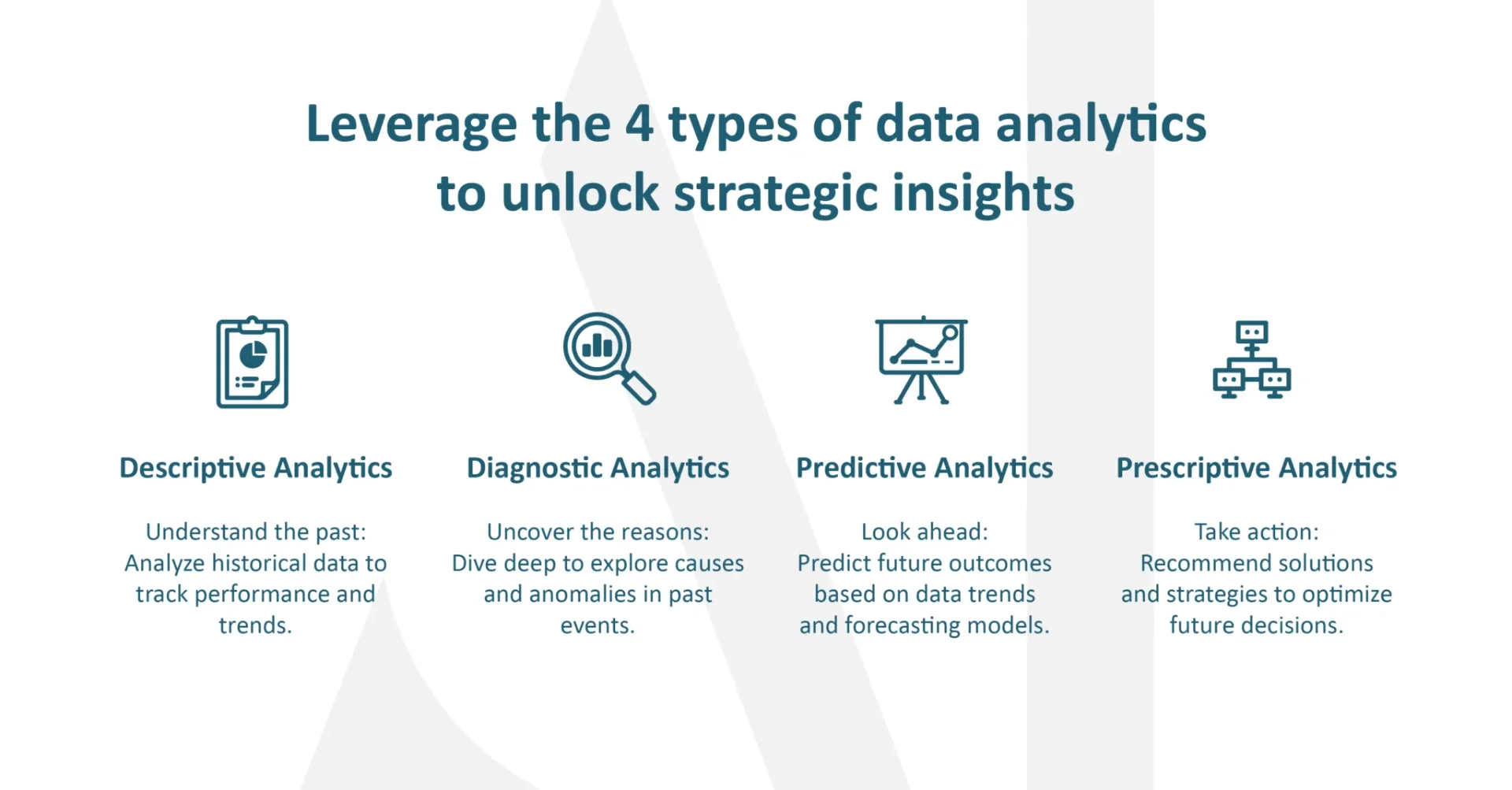
Data analysis can be categorized into four main types, each serving different purposes and applications:
1. Descriptive Analytics – Understanding What Happened
This involves collecting, summarizing, and describing historical data such as sales figures, performance results, or customer counts. It provides executives with a comprehensive overview of the business for strategic planning.
2. Diagnostic Analytics – Identifying the Cause
Focuses on uncovering the reasons behind events and problems by analyzing relationships between various factors using statistical tools.
3. Predictive Analytics – Forecasting the Future
Uses statistical modeling and machine learning with historical data to predict future trends, such as customer demand, allowing for effective operational planning.
4. Prescriptive Analytics – Recommending Actions
Provides the best course of action for specific situations using advanced technologies like AI to support proactive decision-making.
5 Data Analysis Processes to Enhance Organizational Performance
-
Define Objectives and Questions
Clear objectives aligned with business needs guide the analysis toward meaningful and practical outcomes. -
Data Collection
Gather data from diverse sources, such as inventory tracking systems, online surveys, websites, or social media. -
Data Cleaning and Organization
Eliminate unusable data and systematically organize information using automated tools to reduce errors in analysis. -
Data Analysis
Use appropriate methods and tools to support accurate, timely, and effective strategic decisions. -
Interpretation and Presentation
Present analysis results in an easy-to-understand, real-time format to facilitate swift decision-making.

ERP Systems: A Powerful and Accurate Data Analysis Tool
Enterprise Resource Planning (ERP) systems are not only effective resource management tools but also powerful platforms for data analysis. ERP systems integrate data from various departments into a centralized system, minimizing redundancy and human error through six key functions:
✅ 1. Centralized Data
Consolidates data from all departments in one system, providing real-time integration and a holistic organizational view.
✅ 2. Data Standardization
Ensures consistent data formats—such as units, product codes, and cost categories—enhancing the accuracy and comparability of analysis.
✅ 3. Validation & Approval Workflow
Prevents data errors through approval processes, ensuring reliable data for accurate analysis.
✅ 4. BI Tools and Dashboards
Visual dashboards and business intelligence tools provide automated daily and monthly analytics reports, summarizing sales, costs, and inventory data for improved decision-making.
✅ 5. Drill-Down and Traceability
Enables detailed tracking from high-level overviews down to individual transactions or purchase orders, aiding root-cause analysis and trend forecasting beyond the capabilities of Excel.
✅ 6. Integration with External Tools
Supports integration with tools like Power BI, Tableau, or Google Data Studio, enabling advanced analytics and interactive data visualization.
ERP systems also serve as robust data analytics platforms, transforming large volumes of raw data into actionable insights for various departments:
-
Accounting
Consolidates financial data into a single system and generates real-time reports, enabling accurate analysis of cash flow, costs, and financial trends. -
Sales & Marketing
Aggregates customer and sales data to analyze buying behavior, identify best-selling products, and plan targeted marketing strategies. -
Warehouse Management
Tracks, analyzes, and forecasts inventory levels for efficient warehouse operations.
Moreover, ERP systems offer a range of features including real-time reporting, advanced data analysis, and future trend forecasting—empowering organizations to achieve long-term business planning and sustainability.
For consultation with our ERP implementation experts, please contact us athttps://aresth.co.th/contactus
Conclusion: Data Analysis and Business Success
Data analysis is a cornerstone of effective business management. It enhances the accuracy and speed of decision-making, reduces costs, improves production efficiency, prevents errors, and provides deep insights into customer behavior.
At ARES, we specialize in ERP and MES system development. We are ready to help you build a strong foundation for data analysis and apply it effectively across your operations—empowering your business to thrive in the digital age.

Contact us
For a demo, please contact us at Contact Us or for further inquiries:
Phone: 0633253640 or 02-6863000 ext. 3042
Email: support@aresth.co.th
What is E-TAX?
E-TAX Invoice & Receipt is the tax invoice formatted from paper to electronic information. E-tax needs to have a digital signature or Time stamp from ETDA (Electronic Transactions Development Agency)

ARES x Automation Expo 2024
ARES x Automation Expo 2024, 13-15 March 2024 at Nongnooch International Convention and Exhibition Center, Pattaya.

How Does the Development of a "Production System" Improve Business or Factory Efficiency?
A production system is a key component that enhances the efficiency of the manufacturing process. Developing a production system, therefore, helps drive and increase your business's competitive edge.