


Did You Know These Details
Before Choosing an ERP System
Whether you are an executive looking to leverage an ERP system to reduce organizational costs and enhance management efficiency, or an IT department tasked with upgrading an outdated system, there are several key considerations to keep in mind beyond the product's completeness. It is crucial to consider the system's suitability, high flexibility for future development, and cost-effectiveness in relation to its performance. The chosen ERP system should be capable of supporting operations for at least the next 10 to 20 years. Before making a decision, let's explore the following three essential aspects of ERP systems.

An ERP system is a centralized platform that not only complies with legal requirements but also integrates various processes, from accounting costs and procurement to labor management. ERP systems consolidate information from different departments into one platform, which can help businesses streamline operations and make workflows more organized. Before purchasing an ERP system, it is important to thoroughly understand your organization's processes and systematize them without compromising market competitiveness. One of the main objectives is to simplify complex tasks to reduce operational steps.
- Clearly define the Standard Operating Procedures (SOPs) for each department.
- Question every action with "Why is this done this way?" to understand the purpose of each process.
- Establish efficient management regulations to connect data from the beginning to the end of key organizational processes.
- Consider key management factors for improvement, reducing steps, and making processes more systematic.
- Maintain flexible standardized procedures to accommodate future industrial expansion.
2. Understand the Benefits an ERP System Brings to the Organization
ERP systems can integrate the operations of various departments, allowing all departments to manage documents within the system and share real-time data. This improves management efficiency and produces better results. Before choosing an ERP system, ensure that it can add value to the organization and that the purpose of its implementation is clearly understood as a means to enhance management efficiency.
- Save time in data collection.
- Increase data accuracy.
- Improve employee efficiency and collaboration.
- Simplify and shorten workflows while retaining data integrity.
- Allocate human resources to analyze data, letting the system handle data organization.
3. Planning the Organization’s Short-, Medium-, and Long-Term Goals
Switching to a new system involves costs, including the hidden costs of training a large number of employees. Therefore, before choosing an ERP system, it is important to understand the organization’s objectives to ensure that the system chosen is suitable for its needs. Setting phased goals helps analyze outcomes and assess the flexibility and developmental capability of the ERP system in supporting the organization’s future growth.
ArgoERP is a standardized, ready-made system with extensive data management, suitable for various types of businesses. The system is continuously updated through research and development, adapting to the changes of businesses, and growing together with them.

Contact us
For a demo, please contact us at Contact Us or for further inquiries:
Phone: 0633253640 or 02-6863000 ext. 3042
Email: support@aresth.co.th
Data-Driven: Advancing Quality Data Utilization in the Manufacturing Industry
Utilizing data effectively in production processes through a data-driven approach can empower your business to achieve sustainable leadership in the industrial market.
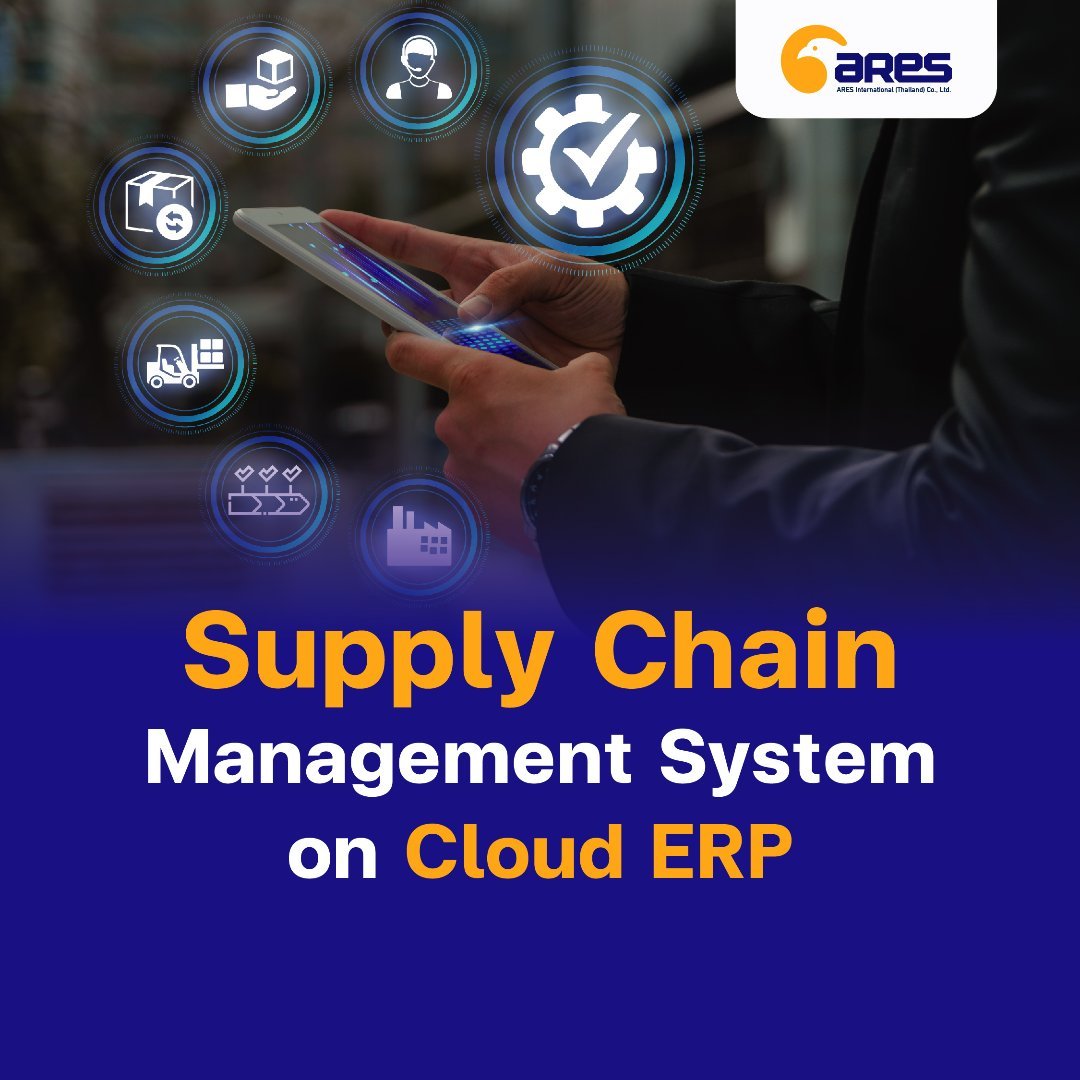
Supply Chain Management System on Cloud ERP
Argo SCM is a system that integrates the production, warehouse, purchasing, and vendor management modules of ArgoERP. It works alongside online transmission functions and electronic signatures (Digital Signature), enabling instant email communication to ensure that vendors never miss any purchase orders. Additionally, the ArgoPortal system can be purchased to allow vendors to log in to ArgoPortal via a website to check order and delivery information.
5 Key KPIs You Can Measure with Data-Driven Manufacturing
Learn how to measure 5 essential factory KPIs—such as OEE, Defect Rate, and Cycle Time—using Data-Driven Manufacturing for accurate decision-making and sustainable cost reduction.